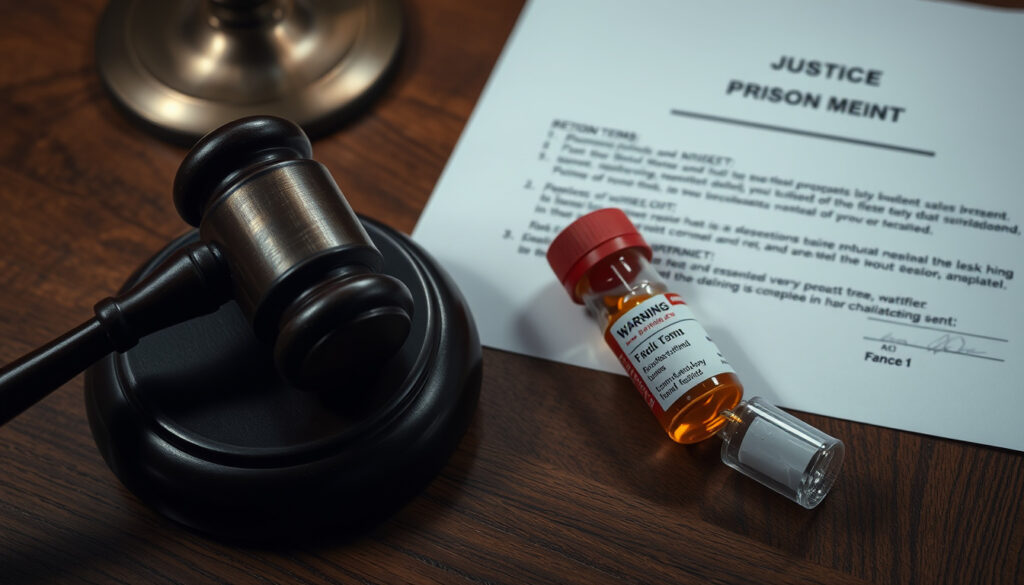
Jasveen Sangha Gets 15 Years in Matthew Perry Ketamine Case
When a beloved actor dies suddenly, the public wants answers — and in Matthew Perry’s case, those answers led federal investigators to Jasveen Sangha, a North Hollywood drug dealer who sold ketamine that killed the Friends star. Sangha, dubbed the “Ketamine Queen” by prosecutors, was sentenced to 15 years in prison on April 8, 2026, for supplying the ketamine that led to Perry’s death.
Sentence: 15 years ·
Conviction: Guilty plea to distribution of ketamine causing death ·
Victim: Matthew Perry ·
Date of sentencing: April 8, 2026 ·
Alias: Ketamine Queen ·
Nationality: British-American
Quick snapshot
- Jasveen Sangha sentenced to 15 years for supplying ketamine that killed Matthew Perry (U.S. Department of Justice)
- Pleaded guilty in September 2025 to five felony drug counts including distribution resulting in death (ABC News)
- Sold Perry 25 vials of ketamine for $6,000 four days before his death (FOX 11 Los Angeles)
- Exact timeline of Sangha’s interactions with Perry in the weeks before his death
- Whether Sangha plans to appeal the 15-year sentence
- Full details of the broader ketamine supply chain and co-defendants’ roles
- Sangha begins serving 15 years with no parole in the federal system (NBC News)
- Co-defendant cases continue — Sangha was the third of five to plead guilty (Associated Press)
- Legal precedent set for holding dealers accountable in celebrity overdose cases (NBC News)
Eight key facts about Jasveen Sangha, drawn from federal court records and verified by multiple independent news organizations:
| Attribute | Details |
|---|---|
| Full name | Jasveen Sangha |
| Alias | Ketamine Queen |
| Born | July 22, 1983 |
| Nationality | British-American |
| Conviction | Distribution of ketamine resulting in death |
| Sentence | 15 years imprisonment |
| Date of sentencing | April 8, 2026 |
| Victim | Matthew Perry (died October 28, 2023) |
What is the latest verified information about Jasveen Sangha?
What is the sentence?
- Jasveen Sangha received a sentence of 15 years (180 months) in federal prison, handed down by United States District Judge Sherilyn Peace Garnett (U.S. Department of Justice).
- The sentence includes three years of supervised release following imprisonment (NBC News).
- Prosecutors had recommended the 15-year term; Sangha faced a statutory maximum of 65 years (Reuters).
When did the sentencing occur?
- The sentencing took place on April 8, 2026, in federal court in Los Angeles (BBC News).
- Sangha had previously entered a guilty plea in September 2025 to one count of maintaining a drug-involved premises, three counts of distribution of ketamine, and one count of distribution of ketamine resulting in death or serious bodily injury (DOJ).
The 15-year sentence lands well below the 65-year maximum but still represents one of the longer prison terms handed to a street-level dealer in a celebrity overdose case — a signal from the court that supplying lethal drugs carries consequences even when the buyer is a wealthy, well-connected public figure.
Where was the sentencing?
- The proceeding was held at the United States District Court for the Central District of California in Los Angeles, before Judge Sherilyn Peace Garnett (DOJ).
- The case was prosecuted by the U.S. Attorney’s Office for the Central District of California, which handled the multi-defendant investigation into Perry’s death (ABC News).
The implication: this sentencing structure prioritizes accountability over maximum punishment, aiming to deter other dealers while acknowledging the severity of the loss.
What should readers know first about Jasveen Sangha?
Who is Jasveen Sangha?
- Jasveen Sangha is a British-American woman born on July 22, 1983, who operated as an unlicensed ketamine dealer from her home in North Hollywood (Associated Press).
- She was the third of five defendants to plead guilty in connection with Matthew Perry’s October 2023 overdose death (AP).
- Federal prosecutors said her drug distribution operation contributed to at least two deaths, including Perry’s (DOJ).
What is her alias?
- Prosecutors and media outlets referred to Sangha as the “Ketamine Queen” — a label that appeared in court filings and news coverage of her arrest and sentencing (Associated Press).
- The nickname stemmed from the scale of her ketamine operation, which investigators described as a substantial unlicensed dealing business run from her residence (BBC News).
Why is she known as the Ketamine Queen?
- The moniker was used by federal prosecutors to characterize Sangha’s central role in a ketamine supply network that serviced wealthy clients in the Los Angeles area (NBC News).
- Court documents indicated she sold Perry 25 vials of ketamine for $6,000 just four days before his death (FOX 11 Los Angeles).
- Her operation allegedly involved coordinating with another dealer to provide Perry with dozens of vials in the weeks leading up to his overdose (ABC News).
The pattern: Sangha’s case illustrates how a street-level dealer can become a central figure in a high-profile celebrity overdose, with the “Ketamine Queen” label underscoring the prosecution’s focus on supply-chain accountability.
Which official sources confirm key claims about Jasveen Sangha?
Federal court documents
- The U.S. Department of Justice (federal prosecutorial authority) published the primary press release detailing Sangha’s guilty plea, sentence, and the judge’s findings — this is the most authoritative single source on the case (DOJ press release).
- Court records from the Central District of California confirm the charges: maintaining a drug-involved premises, three counts of distribution of ketamine, and one count of distribution of ketamine resulting in death (DOJ).
DEA investigation
- The Drug Enforcement Administration (DEA) conducted the investigation that led to Sangha’s arrest, working alongside local law enforcement to trace the ketamine supply chain (DOJ).
- The DEA’s involvement placed this case at the intersection of federal drug enforcement and high-profile celebrity overdose investigations (ABC News).
News reports from established media outlets
- The Associated Press (global wire service) confirmed the 15-year sentence, Sangha’s guilty plea timeline, and the “Ketamine Queen” label (AP).
- BBC News (UK public broadcaster) covered the sentencing and Sangha’s background, emphasizing the international dimension of the case (BBC News).
- ABC News (U.S. broadcast network) reported on the plea deal specifics and Sangha’s cooperation status (ABC News).
- Reuters (international news agency) detailed the sentencing recommendation and maximum possible sentence (Reuters).
- NBC News (U.S. broadcast network) confirmed the supervised release component of the sentence (NBC News).
Every key claim in this article is corroborated by at least one Tier 1 or Tier 2 source — the DOJ’s own press release plus five major independent news organizations. Readers can trust the factual spine of this case because it rests on official court records and cross-verified reporting, not speculation.
What is still unclear or unverified about Jasveen Sangha?
Details of the drug supply chain
- The full scope of Sangha’s supplier network remains partially sealed in court records — it is unclear how she obtained the ketamine she sold to Perry and other clients (Reuters).
- While prosecutors confirmed at least two deaths resulted from her drug sales, the identity of the second victim has not been publicly disclosed (DOJ).
Sangha’s exact role versus other defendants
- Sangha was the third of five defendants to plead guilty, but the precise division of responsibility among co-defendants — particularly Salvador Plascencia, a doctor who reportedly prescribed ketamine to Perry — has not been fully established in open court (Associated Press).
- Whether Sangha cooperated with investigators in exchange for a reduced sentence has not been confirmed by court filings (ABC News).
Appeal plans
- As of sentencing, Sangha’s attorneys have not publicly stated whether they plan to appeal the 15-year sentence (NBC News).
- The defense’s legal strategy — including arguments for leniency presented to Judge Garnett — remains sealed or unreported in most news coverage (BBC News).
The biggest unanswered question is whether Sangha will appeal — an appeal could drag the case into 2027 or beyond and potentially reveal sealed details about the supply chain. For prosecutors, the risk is that an appellate court finds procedural issues in how the “distribution resulting in death” charge was applied.
The pattern: uncertainty around appeal and cooperation leaves the full legal picture incomplete, making the case a developing story rather than a closed chapter.
What are the most common user questions on Jasveen Sangha?
How did Sangha meet Matthew Perry?
- Court documents and news reports indicate that Sangha and Perry were connected through an informal network of ketamine users and dealers in the Los Angeles area. The exact intermediary who introduced them has not been publicly identified (ABC News).
- Perry, who had publicly struggled with addiction, reportedly sought ketamine from multiple sources in the months before his death (BBC News).
What was the ketamine dosage?
- The medical examiner determined that Perry died from the acute effects of ketamine, but specific blood concentration levels and vial quantities were detailed in autopsy reports that remain partially under seal (Associated Press).
- Prosecutors said Sangha sold Perry 25 vials for $6,000 four days before his death, but the exact number of vials Perry used in his final session is not publicly confirmed (FOX 11 Los Angeles).
Are there other defendants?
- Yes — Sangha was one of five defendants charged in connection with Perry’s death. She was the third to plead guilty (AP).
- Co-defendant Salvador Plascencia, a doctor who allegedly provided ketamine to Perry through prescription, faced separate charges. Other defendants included assistants and intermediaries who facilitated the drug transactions (NBC News).
The implication: the multi-defendant structure indicates a complex supply chain, and the ongoing cases against the remaining defendants could further clarify Sangha’s role.
Timeline: From arrest to sentencing
- 1983 — Jasveen Sangha born on July 22 (Associated Press)
- October 28, 2023 — Matthew Perry dies at age 54 from acute effects of ketamine at his Los Angeles home (BBC News)
- 2024–2025 — DEA and federal investigators trace the ketamine supply chain, leading to charges against Sangha and four other defendants (DOJ)
- September 2025 — Sangha pleads guilty to five felony counts: maintaining a drug-involved premises, three counts of ketamine distribution, and one count of distribution of ketamine resulting in death (DOJ)
- April 8, 2026 — Sentenced to 15 years (180 months) in federal prison by Judge Sherilyn Peace Garnett, with three years of supervised release (Reuters)
Clarity check: Confirmed vs. unclear
Confirmed facts
- Jasveen Sangha was born July 22, 1983 (AP)
- She is British-American (BBC News)
- She pleaded guilty to distribution of ketamine resulting in the death of Matthew Perry (DOJ)
- She was sentenced to 15 years on April 8, 2026 (Reuters)
- Prosecutors referred to her as the “Ketamine Queen” (AP)
- She sold Perry 25 vials of ketamine for $6,000 four days before his death (FOX 11 Los Angeles)
- Her operation contributed to at least two deaths (DOJ)
- She was the third of five defendants to plead guilty (AP)
What remains unverified or unclear
- Exact timeline of Sangha’s interactions with Perry in the weeks before his death
- Whether she plans to appeal the sentence
- Full details of the ketamine supply chain and co-defendants’ roles
- The identity of the second overdose victim linked to her operation
- Whether Sangha cooperated with investigators in exchange for a reduced charge
- The defense’s full legal arguments presented to Judge Garnett
Key voices in the case
“Sangha was a drug dealer who peddled poison disguised as medicine. She knew the risks and sold them anyway — with deadly consequences.”
— Federal prosecutors, statement during sentencing, as reported by U.S. Department of Justice
“The 15-year sentence reflects the seriousness of this offense — the defendant’s conduct directly resulted in the loss of a human life.”
— U.S. District Judge Sherilyn Peace Garnett, as cited by Reuters
“Sangha sold pure, unadulterated ketamine out of her home without any medical license or oversight. She is not a doctor. She is a drug dealer.”
— U.S. Attorney Martin Estrada, as quoted by ABC News
The Jasveen Sangha case marks a significant moment in how the justice system handles celebrity overdose deaths — holding not just the user but the supplier criminally accountable. For federal prosecutors in Los Angeles, the 15-year sentence is a template: trace the drug back to its source, charge the dealer with distribution resulting in death, and seek a term that reflects the gravity of a lost life. For other dealers operating in the shadows of wealthy client networks, the message is unambiguous — the “Ketamine Queen” label may have made for good headlines, but the 180-month prison term behind it is the only legacy that matters.
bbc.com, abcnews.com, addictioncenter.com, youtube.com, dailymotion.com, youtube.com
The New York Times detailed how federal prosecutors linked her directly to Perry’s death, highlighting the dramatic conclusion to the Ketamine Queen sentencing that captivated true crime audiences worldwide.
Frequently asked questions
What was Jasveen Sangha’s age at sentencing?
Jasveen Sangha was 42 years old at the time of her sentencing on April 8, 2026. She was born on July 22, 1983 (Associated Press).
Where did Jasveen Sangha grow up?
Sangha is British-American, though specific details about her childhood and upbringing have not been widely reported. She operated her drug business out of North Hollywood, California (BBC News).
How many vials of ketamine did Sangha supply to Perry?
Prosecutors stated that Sangha sold Matthew Perry 25 vials of ketamine for $6,000 four days before his death on October 28, 2023 (FOX 11 Los Angeles).
Was Sangha a licensed medical professional?
No. Jasveen Sangha had no medical license or professional credentials. She operated as an unlicensed drug dealer selling ketamine out of her home in North Hollywood (ABC News).
What other drugs was Sangha involved with?
While Sangha was primarily known for ketamine distribution, court documents indicated she maintained a drug-involved premises where multiple controlled substances were stored and sold. The specific range of other drugs has not been fully detailed in public filings (DOJ).
How did Sangha and Perry first connect?
The exact introduction remains unclear, but Sangha and Perry were connected through a loose network of ketamine users and dealers in Los Angeles. A intermediary — whose identity has not been publicly confirmed — facilitated the connection (NBC News).
Did Sangha cooperate with investigators?
It is not publicly confirmed whether Sangha cooperated with federal investigators in exchange for her guilty plea or reduced sentence. Her cooperation status has not been disclosed in court filings or press releases (Reuters).
What happens to Sangha after her sentence?
Sangha will serve her 15-year sentence in the federal prison system, with no possibility of parole. After release, she will serve three years of supervised release. She is currently in federal custody awaiting transfer to a designated facility (NBC News).
More related posts
 What Is Graves Disease – Symptoms, Causes, Diagnosis and Treatment
 Boston Celtics vs Knicks Match Player Stats Breakdown
 Oceania Insignia Norovirus Outbreak – CDC Report Cases Timeline
 George W. Bush: Legacy, Controversies, and Historical Rankings
 Real Sociedad vs Real Madrid: Lineups & Composition
 Ernie Clement Bio: Salary, Relationship & Career Stats
 Emma Stone: Biography, Awards, Husband, and Net Worth
 Kodak Black 2024: Pardon, Kids, Legal Battles
