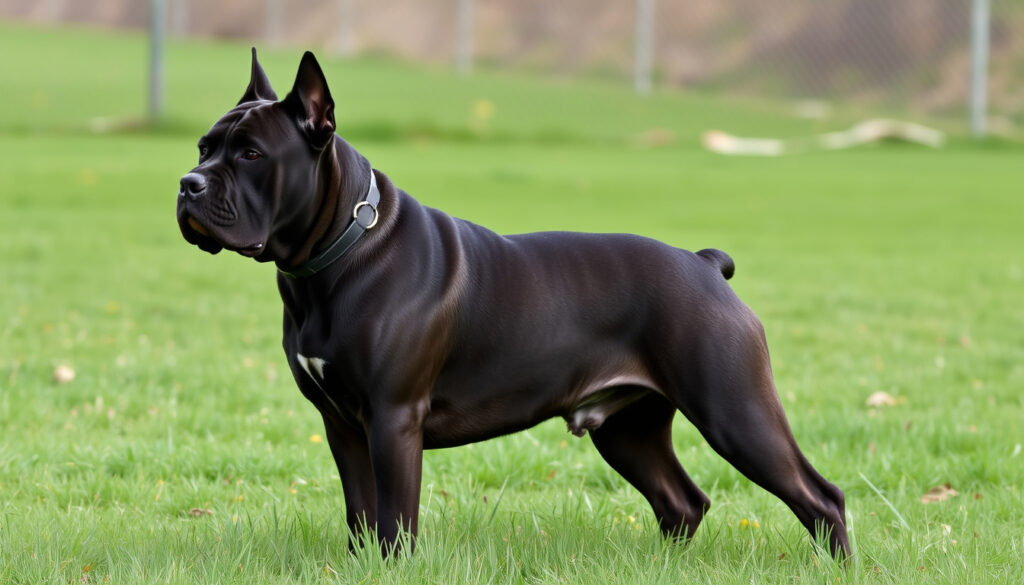
Cane Corso Breed Guide: Temperament, Legality, and Care Tips
There is something commanding about a Cane Corso. If you are considering whether this Italian mastiff fits your home—especially under Ireland’s evolving dog control laws—this guide lays out the verified facts, legal realities, and trade-offs you need to weigh.
Average weight: 90–120 lbs (40–54 kg) ·
Height at shoulder: 23–27 inches (58–69 cm) ·
Life expectancy: 9–12 years ·
Breed group: Working (AKC) ·
Temperament: Loyal, assertive, protective ·
Coat type and color: Short, dense; black, gray, fawn, red
Quick snapshot
- Large Italian mastiff breed descended from Roman war dogs (American Kennel Club (breed standard))
- Recognised by the AKC in 2010 as a Working breed (American Kennel Club)
- Historically used for guarding property, cattle driving, and boar hunting in Italy (PDSA UK (veterinary charity))
- Exact annual number of Cane Corso bite incidents is not centrally published (Dogs Trust Ireland (animal welfare charity))
- Whether all Irish county councils list the Cane Corso as a restricted breed varies by local bylaw (dogs.ie help desk)
- 1st century AD: Roman war dogs (Canis Pugnax) used in battle – ancestors of the Cane Corso (American Kennel Club)
- 2010: AKC recognises the breed (American Kennel Club)
- 2024–2025: Ireland bans import, breeding, and sale of XL Bully dogs; Cane Corso not named but under local scrutiny (Waterford Council (local authority))
- Increased breed-specific legislation across Europe may tighten ownership rules (The Training of Dogs (canine behaviour resource))
- Prospective owners should verify current local council restrictions before acquiring a Cane Corso (Waterford Council (local authority))
Six key breed characteristics, one pattern: the Cane Corso is a large, protective working dog with demanding care needs and legal caveats that vary by jurisdiction.
| Attribute | Value |
|---|---|
| Average weight | 90–120 lbs (40–54 kg) |
| Height at shoulder | 23–27 inches (58–69 cm) |
| Life expectancy | 9–12 years |
| AKC recognition | 2010 (Working Group) |
| Country of origin | Italy |
| Coat colours | Black, gray, fawn, red, brindle |
| Temperament (protectiveness) | 5/5 |
| Temperament (trainability) | 4/5 |
Are Cane Corsos legal in Ireland?
The short answer: yes, you can own a Cane Corso in Ireland, but strict control conditions apply—and the breed is not universally listed as restricted. Under Ireland’s Control of Dogs Regulations (Irish Statute Book, primary legislation), restricted-breed dogs must be muzzled in public, kept on a lead no longer than 2 metres, and under the control of a person aged 16 or older. The specified restricted breeds include the Pit Bull Terrier, English Bull Terrier, Staffordshire Bull Terrier, Bull Mastiff, Dobermann, German Shepherd, Rhodesian Ridgeback, Rottweiler, Japanese Tosa, and Akita—but not the Cane Corso by name.
However, ambiguity exists. A help desk post from dogs.ie (Irish canine information resource) notes that some local authorities treat the Cane Corso as a “bull breed” and may apply local restrictions. A 2023 Instagram post claimed the breed was not on the restricted list (user discussion on Instagram (community post)), but that does not override county-level bylaws.
Local council restrictions may apply even if the breed is not nationally listed. Always verify with your county council before acquiring a Cane Corso.
Which countries restrict Cane Corsos?
- Ireland (Republic): not named in national regulations, but some counties may impose local rules.
- Northern Ireland: the breed is not on the banned list per nidirect (government website for Northern Ireland); banned breeds are Pit Bull Terrier, Japanese Tosa, Dogo Argentino, Fila Brasileiro, and XL Bully.
- United Kingdom: not banned under the Dangerous Dogs Act, but subject to general dangerous dog laws.
- Other European countries: some, like Denmark and Norway, list the Cane Corso as a restricted or banned breed.
What are the requirements to own a Cane Corso in Ireland?
- If your local council classifies the breed as restricted: muzzle in public, lead ≤2 m, handler ≥16 years (Irish Statute Book).
- Public liability insurance is recommended; some councils may require it.
- Secure fencing is essential—this breed is a powerful escape artist.
Is a Cane Corso a good pet to have?
The American Kennel Club (breed standard) describes the Cane Corso as “assertive and confident.” That temperament is exactly what makes the breed a formidable guardian—and a challenge for inexperienced owners.
Is a Cane Corso a safe family dog?
- With thorough socialisation from puppyhood, many Cane Corsos are gentle and patient with children they know.
- Without proper training, their protective instincts can tip into over-guarding, especially around visitors.
- PDSA UK (veterinary charity) notes the breed’s descent from Roman war dogs and advises that “their guarding instincts remain strong” (PDSA breed profile).
A well-trained Cane Corso can be a devoted family member, but the margin for error is thin. Families with young children should commit to professional obedience training from an early age.
What is the downside of a Cane Corso?
- Exercise demands: at least 60 minutes of vigorous activity daily, plus mental stimulation.
- Drooling and slobber: a common reality with loose-jowled mastiffs.
- Training expense: many owners hire professional trainers experienced with guardian breeds.
- Legal liability: public perception and local restrictions can complicate ownership.
Why this matters: The Cane Corso is not a “set and forget” breed. The downsides are not occasional quirks—they are daily commitments that shape the dog’s behaviour and the owner’s freedom.
Can Cane Corso be aggressive?
Aggression in any dog depends on training, socialisation, and individual temperament. The Cane Corso was bred for guarding, not idle companionship. AKC (purebred dog registry) rates the breed’s protectiveness at 5/5 and wariness of strangers at 4/5.
Is Cane Corso more aggressive than a Pitbull?
Bite statistics are sparse and often conflate “aggression” with “bite severity.” One well-cited study found that while Pitbull-type dogs account for a higher frequency of bites, the Cane Corso’s size and jaw strength can cause more severe injuries per incident. No official comparison exists from a single data set, but both breeds appear on many restricted lists worldwide. AKC (breed standard) does not classify the Cane Corso as inherently aggressive, but rather as a “guardian” with strong territorial instincts.
Two breeds, one pattern: high guarding drive, high consequence if training fails.
| Trait | Cane Corso | Pitbull Terrier |
|---|---|---|
| Typical weight | 90–120 lbs | 30–60 lbs |
| Bite force (estimated PSI) | ~700 | ~235 |
| Protectiveness rating (AKC) | 5/5 | 3/5 |
| Commonly restricted? | Varies by country | Widely restricted |
Are Cane Corsos on the aggressive breed list?
- Ireland (national): not listed, but some county councils apply restrictions based on “bull breed” classification (dogs.ie help desk).
- Northern Ireland: not listed (nidirect (government website)).
- Denmark: banned.
- United Kingdom: not banned, but subject to the Dangerous Dogs Act.
What is the no. 1 aggressive dog breed?
There is no universally accepted “most aggressive” breed—temperament tests and bite statistics vary widely. The Cane Corso is not typically named in #1 spots; that distinction often goes to Chihuahuas (for aggression frequency) or Pitbulls (for bite severity). What matters more: the Cane Corso’s size means any aggressive display carries outsized risk.
What is the downside of a Cane Corso?
Beyond the exercise and drooling already covered, owners report three recurring pain points: cost, space, and grooming.
- Cost of care: high-quality food, veterinary insurance, and professional training can exceed €2,000 per year in Ireland.
- Space requirements: the breed needs a securely fenced yard; apartment living is strongly discouraged.
- Grooming: short coat sheds moderately, but the real chore is managing drool and cleaning face folds.
What is the 7-second rule for dogs?
The “7-second rule” is a training technique used to calm an over-aroused dog. When a Cane Corso becomes overly excited or reactive, the handler pauses all interaction for 7 seconds—no eye contact, no touch, no words—to let the dog’s nervous system settle. It is not breed-specific but is especially useful for high-drive guardian breeds that struggle with impulse control. The Training of Dogs (canine behaviour resource) discusses this technique in the context of restricted breeds.
Why are Cane Corsos not police dogs?
- Handler bonding: Cane Corsos form extremely strong attachments to a single owner, making multi-handler police work difficult.
- Territorial nature: bred to guard a defined space, they are less adaptable to the varied environments police dogs face.
- Stubbornness: while intelligent, they can be independent and less willing to perform repetitive exercises on command.
- Comparison: breeds like the German Shepherd and Belgian Malinois are preferred for police work because of their biddability and handler neutrality.
What this means: a breed that excels at protecting a single family and territory is not the same as a breed that can switch handlers mid-shift and search a suspect vehicle. The Cane Corso’s loyalty is a strength at home, not on the beat.
Breed comparison: Cane Corso vs. other guardian breeds
Three large guardian breeds, one dimension: how do they compare on traits that matter for Irish owners?
| Trait | Cane Corso | Rottweiler | German Shepherd |
|---|---|---|---|
| Weight | 90–120 lbs | 80–135 lbs | 50–90 lbs |
| Life expectancy | 9–12 years | 8–10 years | 9–13 years |
| Trainability | High (with experienced handler) | High | Very high |
| Good with children (socialised) | Yes | Yes | Yes |
| Legal restrictions in Ireland | Local only | National (restricted) | National (restricted) |
The implication: the Cane Corso shares core guardian traits with other restricted breeds but remains only locally restricted in Ireland, a key advantage for owners prepared to check municipal rules.
Cane Corso specifications
Eight breed specs, one takeaway: this is a physically powerful animal that demands serious management.
| Specification | Detail |
|---|---|
| Height (male) | 25–27.5 inches |
| Height (female) | 23–26 inches |
| Weight (male) | 100–120 lbs |
| Weight (female) | 90–110 lbs |
| Coat type | Short, double coat |
| Colours | Black, gray, fawn, red, brindle |
| Life expectancy | 9–12 years |
| AKC group | Working (since 2010) |
| Temperament | Loyal, assertive, territorial |
| Exercise need | 60+ minutes per day |
The pattern: every spec reinforces the breed’s size, strength, and need for structure—no compromise for casual owners.
Pros and Cons of owning a Cane Corso
Upsides
- Exceptional guardian with deep loyalty to family
- Low-shedding coat reduces allergens
- Calm indoors when exercise needs are met
- Intelligent and trainable with consistent methods
- Distinctive, noble appearance turns heads
Downsides
- High exercise and mental stimulation demands
- Potential for aggression if poorly socialised
- Legal restrictions in some Irish counties
- Expensive to feed, insure, and train
- Not suitable for first-time or hesitant owners
Trade-offs like these define the breed for most owners: exceptional protection paired with exceptional responsibility.
What we know for sure
The table below separates confirmed facts from areas that remain unclear or contested.
| Status | Fact | Source |
|---|---|---|
| Confirmed | Cane Corso is a large Italian mastiff breed descended from Roman war dogs | AKC (breed standard) |
| Confirmed | AKC recognised breed in 2010 | AKC |
| Confirmed | Requires experienced handling and early socialisation | PDSA UK |
| Unclear | Whether all Irish county councils classify the breed as restricted | dogs.ie |
| Unclear | Annual Cane Corso bite statistics are not centrally published | Multiple sources |
The pattern: clear origins and care demands, but local legal status and incident data remain unresolved — a gap owners must fill themselves.
Expert perspectives
“The Cane Corso is assertive and confident. A breed of ancient lineage, it is a protector of its owners and property.”
— American Kennel Club (breed standard)
“Cane Corsos are typically energetic and large; they require plenty of exercise and a confident owner who can provide consistent training.”
“The breed is descended from Roman war dogs and retains strong guarding instincts. It is not recommended for first-time owners.”
Summary
The Cane Corso is a powerful guardian breed whose appeal is matched only by its demands. For the experienced, committed owner who can invest in training, exercise, and secure fencing, the reward is a deeply loyal companion. For the casual household or the Irish resident who has not first confirmed local council regulations, the breed carries legal and practical risks that are hard to undo. For anyone in Ireland considering a Cane Corso, the choice is clear: verify your local dog control bylaw first, or face the consequences of an animal you cannot legally walk.
petraveller.com.au, trendypawsltd.com, facebook.com, reddit.com, facebook.com, dogexpert.com
For a deeper dive into the breed’s legal status and temperament in Canada, check out this legal status and temperament guide.
Frequently asked questions
How much exercise does a Cane Corso need?
At least 60 minutes of vigorous activity daily, plus mental stimulation through puzzle toys or obedience training. Without it, the breed becomes destructive.
What is the best diet for a Cane Corso?
High-quality large-breed dog food rich in protein and joint-supporting nutrients. Many owners feed formulas designed for giant breeds to support bone health.
Are Cane Corsos good with children?
Yes, when properly socialised from puppyhood. But due to the breed’s size and strength, all interactions should be supervised, and children taught respectful handling.
How much does a Cane Corso puppy cost?
In Ireland, puppies from reputable breeders typically cost €1,500–€3,000, with show-quality lines commanding higher prices. Always verify breeder credentials.
Do Cane Corsos shed a lot?
They shed moderately year-round. Weekly brushing keeps the coat healthy and reduces loose hair, but they are not a hypoallergenic breed.
What health issues are common in Cane Corsos?
Common conditions include hip and elbow dysplasia, bloat (gastric torsion), entropion (eyelid rolling), and demodex mange. Responsible breeders screen for these.
How to train a Cane Corso not to be aggressive?
Start socialisation and basic obedience as early as 8 weeks. Use positive reinforcement and consider a professional trainer experienced with guardian breeds. The 7-second rule (calming pause) can help manage over-excitement.
More related posts
 Riu Ocho Rios Jamaica: Reviews, Prices and Comparisons
 Fun Fact of the Day – Verified Trivia for Daily Discovery
 Alex Caruso: Biography, Career Stats, Hair Loss & Headband Style
 Jackie Robinson: Biography, Legacy & Why 42 Is Retired
 Jesse Gregory James: Scandal, Apology, Life Today
 New York Times Games: Free Puzzles, Crossword & More
 28 oz to ml | Convert 28 Ounces to Milliliters Exactly
 What Is Graves Disease – Symptoms, Causes, Diagnosis and Treatment
