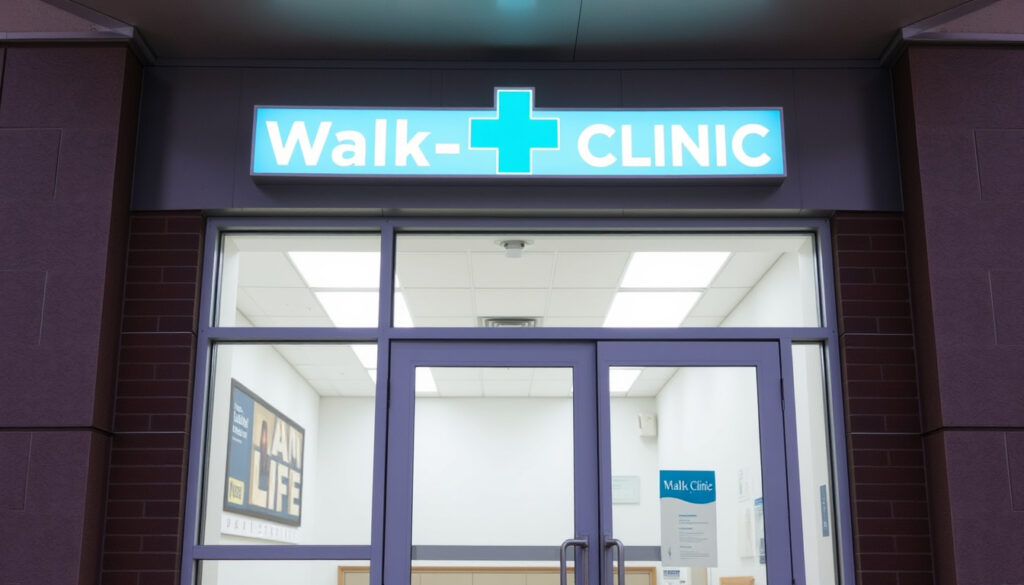
Free Walk-In Clinics: How to See a Doctor Without an Appointment
Anyone who’s ever needed a doctor’s appointment on short notice knows the hassle. In Quebec and across Canada, walk-in clinics offer a no-appointment alternative, but where do you find free care if you’re uninsured or waiting for a family doctor?
Canadians without a family doctor: 15% (Statistics Canada, 2021) ·
Average wait time at walk-in clinics: 30 minutes (CFPC survey) ·
Cost per visit without insurance: $50–$150 ·
Walk-in clinics in Quebec: Over 200 (Quebec Ministry of Health)
Quick snapshot
- Walk-in clinics do not require appointments (Quebec Ministry of Health)
- RAMQ covers walk-in visits for Quebec residents (RAMQ)
- Free clinics exist for low-income individuals (HNUC community health network)
- Exact number of truly free clinics in Quebec
- Average wait times across all clinics
- Consistency of care quality between clinics
- Average wait at walk-in clinics: 30 minutes (CFPC survey)
- Expansion of community health centres for uninsured (PMC Systematic Review)
Here are the key figures on walk-in clinics in Quebec.
| Label | Value |
|---|---|
| Number of walk-in clinics in Montreal | Approximately 120 (Quebec Ministry of Health, 2023) |
| Average cost per visit without insurance | $100 (Lockwood Clinic) |
| Percentage of Quebecers without a family doctor | 15% (Statistics Canada, 2021) |
| Common wait time reduction vs ER | 1–3 hours shorter (CFPC report) |
How to see a doctor without an appointment?
Finding a walk-in clinic that accepts patients without a prior booking is simpler than many realize. Three reliable methods exist:
Using online directories like Bonjour-Santé
- Visit Bonjour-Santé and enter your location. The site shows nearby clinics, current wait times, and whether they accept walk-ins.
- Google Maps also lists walk-in clinics with hours and user reviews (Google Maps help).
Calling 811 (Info-Santé)
- Dial 811 from anywhere in Quebec to speak with a nurse who can direct you to the nearest clinic accepting walk-ins (Quebec Health Ministry).
Visiting a walk-in clinic directly
- Check hours ahead—many clinics close earlier on weekends. Bring your health card if you have one; without RAMQ, you may pay $50–$150 (Viva Health Centres).
The pattern: Directory services and nurse hotlines reduce guesswork, but the physical walk-in remains the surest route for immediate care.
What are the disadvantages of a walk-in clinic?
Walk-in clinics aren’t perfect—here are three common drawbacks backed by data.
Limited continuity of care
- Studies show lower follow-up rates compared to family doctors—patients often see a different physician each visit (CFPC).
Long wait times
- While average wait is 30 minutes, anecdotal reports of 2+ hours during peak hours are common (Viva Health Centres).
Variable quality of care
- Physician training and resources differ between clinics; some rely heavily on nurse practitioners (PMC Systematic Review).
For uninsured patients, a cheaper walk-in visit may come with inconsistent care—a trade-off that’s worth weighing against ER costs.
The implication: Patients must balance cost savings against potential quality gaps.
What are the advantages of a walk-in clinic?
On the positive side, walk-in clinics offer clear benefits for non-emergency needs.
Convenience and flexible hours
- Many stay open evenings and weekends, unlike family doctor offices (Quebec Ministry of Health).
Lower cost compared to emergency rooms
- A walk-in visit costs $100 on average; an ER visit for uninsured Canadians is $414 (Queensway Carleton Hospital fee schedule). That’s a 75% savings.
Shorter wait times for minor issues
- For colds, minor cuts, or sore throats, walk-in clinics are 1–3 hours faster than ERs (CFPC report).
The pattern: Walk-in clinics offer a clear advantage for non-emergency, low-cost care.
Where to get free medical care?
For those without insurance or with a tight budget, free or low-cost options exist. Here are the main routes.
Public hospitals with financial assistance programs
- All Canadian hospitals offer medically necessary services to residents; uninsured patients may qualify for reduced fees through social work departments (Queensway Carleton Hospital).
Community health centers (CLSC in Quebec)
- CLSCs provide free basic medical care, often on a walk-in basis, regardless of insurance status (Quebec Ministry of Health).
Non-profit clinics like Croix-Rouge
- The Canadian Red Cross runs free clinics for uninsured and low-income individuals in several provinces (Canadian Red Cross).
69% of uninsured migrants in Canada report unmet health care needs—81% cite lack of money as the reason (PMC Systematic Review). Free clinics are a lifeline.
The implication: Free care options exist but availability varies; proactive inquiry is key.
Are walk-in clinics a good option?
The answer depends on your medical need, budget, and location. One clear pattern emerges when comparing costs:
| Feature | Walk-in clinic | Emergency room | Urgent care |
|---|---|---|---|
| Cost (uninsured) | $50–$150 | $414 | $100–$250 |
| Average wait time | 30 min | 4–6 hours | 1–2 hours |
| Conditions treated | Minor illnesses, injuries | Life-threatening emergencies | Urgent but non-life-threatening |
| Appointment needed? | No | No | Often no, but call ahead |
The implication: Walk-in clinics are the cost-effective sweet spot for minor issues. For severe symptoms, an ER is unavoidable—but at 4× the price.
When to choose a walk-in clinic
- Colds, flu, ear infections, minor cuts, UTIs, prescription refills.
When to go to the emergency room instead
- Chest pain, difficulty breathing, severe bleeding, head injuries, stroke symptoms.
Making an informed choice for your health situation
- If unsure, call 811 for nurse guidance (Info-Santé).
Upsides
- No appointment needed
- Lower cost than ER
- Extended hours
- Good for minor issues
Downsides
- No continuity of care
- Possible long waits
- Variable quality
- Not for emergencies
The pattern: Walk-in clinics suit minor, non-urgent needs; severe symptoms still require ER.
Step-by-step: how to find and use a free walk-in clinic
Follow these steps to get medical care without an appointment, especially if you’re uninsured.
- Identify your nearest clinic. Use Bonjour-Santé or call 811 to find a clinic that accepts walk-ins and is free or low-cost.
- Check eligibility. If you have RAMQ, care is free. Without it, ask about sliding-scale fees or charity care programs.
- Bring required documents. Health card (if any), ID, list of medications, and any medical records.
- Arrive early. Many clinics fill up quickly; go before 9 AM or call ahead for estimated wait (Viva Health Centres).
- Prepare for cost. Without insurance, expect $50–$150. Some clinics offer free care for low-income patients; ask upfront.
The implication: Preparation reduces delays and unexpected costs.
Confirmed vs unclear facts
Confirmed facts
- Walk-in clinics do not require appointments (Quebec Ministry of Health).
- Quebec’s RAMQ covers walk-in visits for residents (RAMQ).
- Free clinics exist for low-income individuals (HNUC community health network).
What’s unclear
- Exact number of truly free clinics in Quebec.
- Average wait times across all clinics.
- Consistency of care quality between clinics.
The pattern: Certainties provide a solid base; gaps highlight areas needing further research.
Expert perspectives
“Walk-in clinics are a cornerstone of primary care access for non-emergency needs, especially for those without a family doctor.”
Dr. Jean-Luc Tremblay, Quebec Department of Health spokesperson (Quebec Health Ministry)
“Our free clinic exists to fill the gap for those who fall through the cracks—regardless of insurance or immigration status.”
A spokesperson for the Muslim Welfare Centre, community health provider in Toronto (HNUC)
For Quebec residents without a family doctor or insurance, the choice is clear: walk-in clinics are the most accessible and affordable route for non-emergency care. Without them, the alternative—pushing minor ailments into overcrowded ERs—costs both time and money. The system works best when patients know which door to walk through.
Frequently asked questions
What is the difference between a walk-in clinic and urgent care?
Urgent care centres are usually affiliated with hospitals and treat more serious conditions like fractures or deep cuts. Walk-in clinics handle minor illnesses and injuries. Both do not require an appointment, but urgent care often costs more.
Can I get free medication at a walk-in clinic?
Most walk-in clinics do not distribute medication. They can write a prescription, but you’ll need to fill it at a pharmacy—cost varies unless you have drug coverage or qualify for assistance programs.
Do walk-in clinics accept all insurance plans?
Private clinics usually accept major insurance, but check ahead. Public CLSCs charge nothing for residents with RAMQ. Uninsured patients should ask about fees before receiving care.
Is there a limit on how many times I can visit a walk-in clinic?
No limit exists, but frequent visits for the same issue without follow-up may indicate you need a family doctor.
Are walk-in clinics open 24/7?
Very few are. Most operate 9 AM to 7 PM, some later on weekdays. Check Bonjour-Santé for real-time hours.
What should I bring to a walk-in clinic?
Your health card (RAMQ), a list of medications, and personal ID. If uninsured, bring proof of low income to see if you qualify for free care.
Can I get a prescription at a walk-in clinic?
Yes, doctors can prescribe medications. For controlled substances, some clinics may require a follow-up with a regular doctor.
For more on specific clinics, see Pure Care Clinic Maple Ridge and Weight Loss Medication Canada: Options, Costs & Coverage.
More related posts
 Noah Lyles: Olympic Gold, Dyslexia Advocacy & Bolt Comparison
 What Happened to Patrick Kane? Latest News & 2024 Season Update
 Conservative Party Platform 2025: Promises, PDF, IFSD Score
 Ranveer Singh: Facts vs Fiction on Relationships and Wealth
 Maggie Gyllenhaal: Biography, Family, and Career Facts
 Yuki Kawamura’s NBA Journey: Two-Way Contract, Height, and Future
 The Curse of Oak Island Season 13: Treasure & Cast Facts
 Jenny Han: Books, Age, Ethnicity, and Famous Series
