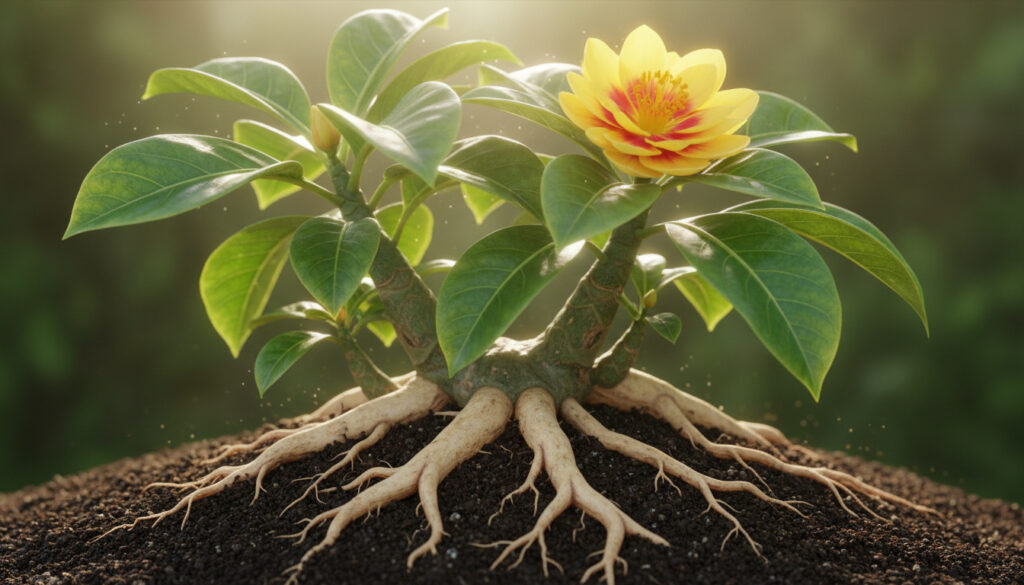
Parts of a Plant – Functions, Structures and Growth
Plants maintain life through six fundamental structures working in concert beneath the soil and above ground. Roots, stems, leaves, flowers, fruits, and seeds form the essential architecture that allows vegetation to anchor, nourish, and reproduce across diverse ecosystems.
Each component performs specialized tasks that sustain growth and survival. From the subterranean networks absorbing mineral salts to the colorful blooms attracting pollinators, these parts operate as an integrated biological system. Understanding their roles provides insight into how flora adapts to environments ranging from backyard gardens to dense forests.
Educational resources from California State Polytechnic University and specialized science curricula break down these components for learners, distinguishing between external features visible to the eye and internal tissues facilitating transport and growth.
What Are the Main Parts of a Plant?
Anchor the plant and absorb water and nutrients from soil.
Provides upright support and transports materials between roots and leaves.
Convert sunlight and water into food through photosynthesis.
Enable reproduction, with fruits protecting seeds that generate new plants.
- Plants exhibit visible diversity in size, shape, color, and structure across all six main parts
- Root systems vary between fibrous networks and single taproots depending on species
- Internal xylem and phloem tissues form the plant’s circulatory system
- Flowering plants reproduce through seeds contained within fruits, while non-flowering species use cones or spores
- Monocots and dicots display distinct leaf venation patterns and vascular bundle arrangements
- Broccoli serves as a common example where multiple parts—stem and flowers—are consumed
| Part | Primary Function | Key Characteristics |
|---|---|---|
| Roots | Anchorage and absorption | Branch into soil, absorb water and mineral salts |
| Stem | Support and transport | Keeps plant upright, holds leaves and flowers |
| Leaves | Photosynthesis | Use sunlight and water to manufacture food |
| Flowers | Reproduction | Bright colors and scents attract birds and insects |
| Fruits | Seed protection and dispersal | Develop from flowers, contain seeds inside |
| Seeds | Propagation | Germinate to produce new plants |
What Are the Functions of Each Plant Part?
Root Systems
Roots secure plants within soil matrices while drawing water and mineral salts upward. These subterranean structures vary significantly across species, with some developing fibrous networks of thin roots and others growing singular thick taproots.
Stem Structure
The stem functions as the plant’s central column, maintaining vertical orientation while serving as a conduit between roots and aerial parts. Specialized tissues within the stem facilitate the movement of water, minerals, and nutrients throughout the organism, a process explained in biology education resources.
Leaf Production
Leaves serve as the primary manufacturing centers where photosynthesis occurs. Through the conversion of sunlight and water, these flat, often oval structures generate the food necessary for sustained growth and energy production.
Reproductive Organs
Flowers represent the reproductive apparatus, utilizing bright coloration and distinctive scents to attract avian and insect pollinators. Following successful pollination, flowers develop into fruits that encase seeds, ensuring the next generation’s dispersal and germination.
Beneath the visible external structures, xylem tissues transport water and minerals upward from root systems, while phloem distributes food and sugars produced in leaves to other plant regions.
What Are the Parts of a Flowering Plant?
Petals and Attraction Mechanisms
The visible portions of flowers include petals that provide coloration and scent profiles designed specifically to attract pollinators. These structures represent the initial interface between the plant and its reproductive partners in the ecosystem.
Stamens and Pistils
Within the flower, stamens and pistils constitute the reproductive machinery, as detailed in botanical classifications of angiosperms. These components facilitate the genetic exchange necessary for fruit and seed development.
How Do Plant Parts Work Together?
Vascular Coordination
Xylem and phloem tissues create an internal highway system connecting all plant parts, supported by forest science research. Water absorbed by roots travels upward through xylem channels, while manufactured food descends through phloem to nourish roots and developing tissues.
Monocots such as grasses and lilies feature narrow leaves with parallel veins and scattered vascular bundles, while dicots like roses and beans display broad leaves with branched veins and ringed vascular arrangements. For more information on how these systems function, you can explore Tècniques d’eco-down.
Structural Variations
Flowering angiosperms exhibit the full six-part structure, whereas gymnosperms including pines reproduce through cones rather than flowers and fruits. Non-flowering plants like ferns and mosses utilize spores for reproduction but maintain similar root, stem, and leaf configurations for basic survival functions.
While flowering plants rely on seeds enclosed within fruits, non-flowering species such as ferns and mosses depend on spores or naked seeds within cones, though both groups utilize roots, stems, and leaves for support and nutrition.
How Do Plants Develop From Seed to Maturity?
- Seed Germination: The initial phase where dormant seeds activate, sprouting primary roots and stems into the surrounding medium.
- Root Establishment: Developing root systems penetrate soil to secure anchorage and begin absorbing water and minerals.
- Vegetative Growth: Stems elongate upward while leaves unfold to maximize photosynthetic surface area for food production.
- Floral Development: Mature plants generate flowers containing the reproductive structures necessary for pollination.
- Fruit and Seed Formation: Successful fertilization leads to fruit development, housing seeds that will eventually disperse to continue the cycle.
What Is Definitively Known About Plant Anatomy?
Established Facts
- Six basic parts constitute standard plant anatomy: roots, stems, leaves, flowers, fruits, and seeds
- Xylem and phloem tissues transport water, minerals, and food throughout the organism
- Photosynthesis occurs specifically in leaf structures
- Flowering plants reproduce via seeds contained within fruits
- Non-flowering plants utilize alternative methods such as spores or cones
Variations Not Fully Detailed
- Specific evolutionary pathways distinguishing monocot and dicot divergence
- Complete biochemical mechanisms governing scent production in flowers
- Environmental trigger thresholds prompting seed germination in various species
- Precise cellular differentiation processes in vascular tissue formation
Why Do Plants Require Specialized Structures?
The division of labor among plant parts reflects evolutionary optimization for survival in terrestrial environments. Roots handle substratum interaction while leaves manage energy conversion, allowing simultaneous resource acquisition from soil and atmosphere. This architectural specialization enables efficient growth across varied ecological niches, from arid deserts to tropical canopies.
In academic contexts unrelated to botany, one might ask What Does PhD Stand For, while laboratory protocols often require converting 21 Degrees Celsius to Fahrenheit for optimal greenhouse conditions. Visual learning materials, including educational diagrams, typically depict these components vertically: roots below ground, supporting stem, photosynthetic leaves, and reproductive flowers culminating in fruit-ensconced seeds.
What Sources Inform This Overview?
Plants consist of six basic parts—roots, stem, leaves, flowers, fruits, and seeds—each with specialized functions to support growth, reproduction, and survival.
Sources describe plants as composed of specialized cells and tissues working together for life functions like growth.
Additional information provided by professional botanical organizations confirms these structural relationships.
What Is the Essential Understanding of Plant Parts?
Plant biology hinges on six interconnected structures performing distinct yet complementary roles. From subterranean anchorage to aerial reproduction, each part contributes to survival through specialized tissue functions and coordinated resource transport. Educational illustrations typically depict these components vertically: roots below ground, supporting stem, photosynthetic leaves, and reproductive flowers culminating in fruit-ensconced seeds, with internal vascular tissues facilitating the movement essential for life.
Frequently Asked Questions
What are the external and internal parts of plants?
External parts include roots, stems, leaves, flowers, fruits, and seeds visible to the eye. Internal structures comprise xylem and phloem tissues that transport water, minerals, and food throughout the plant.
How can I identify plant parts on a diagram?
Educational diagrams typically show roots at the bottom branching into soil, an upright central stem, flat oval leaves attached to the stem, colorful flowers at the top, and seeds within nearby fruits. Internal cutaways reveal bundled xylem and phloem tubes.
What is the difference between monocots and dicots?
Monocots such as grasses feature narrow leaves with parallel veins and fibrous root systems, while dicots like roses display broad leaves with branched veins and often develop taproots. Their vascular bundles also differ in arrangement within stems.
Can you eat different parts of plants?
Yes, humans consume various plant parts. For example, broccoli consists of both stems and flowers, while carrots represent modified taproots. Understanding these distinctions helps identify edible portions versus reproductive structures.
Do all plants have the same six parts?
While flowering plants possess all six parts, non-flowering species like pines lack true flowers and fruits, instead producing cones. Ferns and mosses reproduce through spores but maintain root, stem, and leaf structures for basic survival functions.
How do xylem and phloem function differently?
Xylem tissues transport water and minerals upward from roots to aerial parts, while phloem distributes sugars and food manufactured in leaves to other regions of the plant requiring energy.
More related posts
 Marshawn Kneeland Cause of Death – Confirmed Facts and Timeline
 2025 Canadian Federal Election: Results, Date & Maps
 Highway 11 Closure Today – Ontario Status and Updates
 Mickey Hargitay: Biography of the Bodybuilder and Father
 Britt Robertson: What Happened? Age, Movies, Husband & More
 Fun Fact of the Day – Verified Trivia for Daily Discovery
 Jennifer Botterill: Olympian, NHL Analyst & Hall of Fame
 Jutta Leerdam: Gold Medalist and Jake Paul’s Fiancée
